It’s been a little over two years since I last posted here, but I have some news to share: I’m switching to a new website/blog. I figured it was just time to set up a new website, given developments in the past few years in my life and a general desire to try and rebrand a little. It just made sense to transition to something else.
You can find my new website here: The Adam Project. Follow me there to stay current on all of my new writing and other developments. Overthinking It will also live on in the name of my new-ish Tumblr blog, which will soon be integrated into my new website as well.
Au revoir, Overthinking It. Everyone else: follow me to new lands. (Sorry, that probably sounds cheesy.)
So, the new year is a few weeks underway, and I’ve already made what I hope will be one of the best choices I’ll make all year long: I plan on scaling back my involvement in social media and the Internet in general a lot. As in, maybe a weekly post or two on Facebook, a few tweets, maybe a blog post every week (inner voice says hah, that’s generous). As a replacement for this online time, I plan on writing and reading a whole lot more, with the end result of being more well-read this year than I was last year, and also placing more fiction and nonfiction pieces in various places, hopefully. If you want to call it a resolution, then call it a resolution. Either way, this feels like the logical end result of a lot of my observations and feelings from being online last year, so it’s a no-brainer to me.
The truth is, I don’t really think social media is all that good for me, and I don’t see the personal function it serves for me, not as it is at this time anyway. I really sat back and thought about this at the end of last year, once I reached the winter break from school. There were long stretches of time where I didn’t post anything on Facebook: personal updates, links, shares, whatever you like. It didn’t upset me at all. In fact, it felt pretty awesome, not having to worry about it.
Previously, I worried a lot about posting things regularly and trying to get likes and comments because… because that’s good, right? Getting lots of likes is good, because that means lots of people liked something I said, and I can point to that when talking to other people and say, “See? People like what I say. They think I’m funny/smart/heartfelt/etc.” I suppose retweets and favorites and follows on Twitter work the same way. You say things and share things in a certain way to get people to follow you and share what you say, which you probably got from someone else anyway, and so on so forth. At the end of the day, you get a bunch of followers so you can say you have a bunch of followers.
Now, this is good when you have something to sell. When you’ve got a novel, or a movie, or something significant to show people as a commodity for them to buy, it’s fantastic. I, however, don’t have anything like that, which is why I realized my previously established pattern of online engagement and social media use didn’t make sense. I was marketing a nonexistent product. Some people are awesome at using social media while working on their own original stuff, but I am definitely not one of those people.
Furthermore, I found myself getting sucked into ongoing conversations and (more accurately) arguments going on in the social mediasphere. Granted, there was a lot to talk about last year: global warming, Ebola, Ferguson, politics, feminism, #GamerGate, police brutality, and so much more that it hurts to think about it. Some of the discussion online was thoughtful and smart, but much more of it was stupid. Just, stupid. It was so stupid that it made me think that social media really was making people dumber, like alarmists say it is. I can’t begin to count all the time I spent last year writing hypothetical responses to things online, only to delete it all because I realized I spent all that time writing something in response to something else that was fundamentally, horribly stupid.
AHHH MAKE IT STOP
This gets into a much more problematic reason why I’m scaling back my social media engagement for at least most of or the rest of this year, and possibly further in the future: I think it’s constructed in such a way that it oversimplifies discourse and prevents people from taking actual, appropriate action in the non-Internet world. Simplistic, extremist viewpoints are far easier to express in the space of a tweet or a Facebook post than complex, considered ones. The former are also what get shared, retweeted, etc. more often. More familiar statements then get privileged over newer ones. The construction of social media sites actually makes it easier to share what someone else has said, rather than finding your own way of saying it. This turns social media into a colossal echo chamber of opinions bouncing back and forth with little change, because people by and large are less concerned with changing the minds of those who disagree with them and more concerned with simply being louder. And, in social media, the loudest get the bragging rights. I also think that social media just allows people to let off steam and then move on with their lives like normal, when in fact that might be the last thing they should do. That’s not even getting into the people I meet online who present themselves one way on Facebook and then act totally different (and not in a good way) in real life.
Quite frankly, I’m tired of struggling against this noise every time I want to figure out what’s happening anywhere, and I’m sick of getting upset over what people say and do online. That energy would be better invested on my end in reading, for instance. Two hours spent reading a book – like The Kills by Richard House, for instance, or a hundred other books I really want to tackle – would be more valuable to me than two hours spent over the course of a day thinking about something I want to post on Facebook to get the maximum amount of social media leverage. Two hours spent writing things that could then get published elsewhere, and then shared and commented on by others (including myself), is even better spent.
And that’s the thing too: I want to publish stuff in venues other than my blog, for instance. I want to publish in magazines and presses, and websites on the literary or geek culture side of things, and every essay I write for this blog to initially publish here is something I’ve potentially missed out on placing elsewhere. I have to seriously consider the personal economy I’m creating for myself as a writer, and social media makes it way too easy to give things away for free. I want to get paid.
So, for the most part, I’m not really using social media this year. I still plan on using it to stay in touch with people, but no more overt attempts to say pithy things for the sake of it, and no more sharing of links that I think will make people form a conception of my identity that I want them to have. I want to do most of my work outside social media, writing stories and novels and essays that can be published elsewhere on the Internet, perhaps, and maybe then I’ll be able to use social media more often, because I’ll have something to sell. And, ultimately, I want to figure out a model of engagement that works for me. If it takes the whole year, so be it.
Well, 2014 is over, and I’m thrilled, quite honestly. This was a fairly difficult year for humanity in general, what with the steady decline of America into a dystopian state, widespread harassment of all sorts of non-white-male social groups, institutional bickering and discrimination, police brutality and obstruction of justice, ongoing environmental disaster and downfall, the rising actual threat of cyberattacks and hacking (as opposed to the in-retrospect adorably kitschy threat of the same in early 90s movies) and a whole host of other things.
I’m actually looking forward to 2015 because I hope to finish out my coursework for my PhD with strength and pizzazz (or whatever the academic version of pizzazz is, I dunno). I’ve got a wedding to plan, a book to write (at least a bunch of stories), a lot of friends to get back in touch with, and all around a lot of potential for good things. Which is a great turnaround from 2014, where I encountered some serious growing pains as an academic and learned that there are certain constraints of the academic life, personally and professionally, that I have to deal with while not at the same time retracting myself into a shell that consists of myself, a giant jar of cheese balls, and my PS3.
Another thing I’m looking forward to in 2015: getting caught up on all the crap I missed out on in 2014. I read pretty much nothing published in 2014, and barely watched any movies released this previous year. I’ve got my work cut out for me. To be fair, I march to the beat of my own drum when it comes to choosing what I want to consume, artistically. My choice for first movie to watch for 2015? Samurai Cop, because it looked hilariously awful and I wanted to watch it. That was my reasoning. Seriously.
What follows is a semi-recap of stuff I liked or didn’t like in 2014. Make of it what you will.
***
Best Album No One is Talking About Now:Present Tense by Wild Beasts. This one came out earlier in the year, and I’ve returned to it again and again as the year went on. The restrained disgust and propulsive drive of “Wanderlust.” The sensuousness of “Nature Boy” and “Mecca.” The pure pop of “A Simple Beautiful Truth.” The foreboding darkness of “Daughters,” which is the best digression on the apocalypse I’ve heard in song form. It’s all sublime.
Best Explanation of Why Reading is a Great Art, and Also Potentially a Lost One:What We See When We Read by Peter Mendelsund. This book is an excellent art object in and of itself, cleverly juxtaposing text and visuals within an innovative format to both discuss and demonstrate the relationship between the depiction of people, settings, and things in prose and how we imagine these things through perceptive filters in our minds – and also how our imaginative processes are cancelled out or even oppressed by the adaptations of prose we see in TV, film, illustration, and other mediums. At its core, this book isn’t just a love letter to reading, but a call to arms.
Best Obscure Text I Unearthed and Read:The Cross of Carl by Walter Owen. I discovered this story in The Darkening Garden by John Clute, where Clute kept referring to it throughout the book as a notable example of postwar horror. The Cross of Carl is out of print now, and it has assumedly been out of print for a long time. This is a shame, because once you move past the now-archaic prose style and vocabulary, this is an engrossing and even horrifying story of war and the worst potential of humanity against itself. In particular, the story takes several dark turns that foreshadow the horrors of the Holocaust, despite the fact that The Cross of Carl was published in 1931. One day, I would love to bring this book back into print somehow.
Best Series Finale (And I Will Fight Anyone Who Says Otherwise):The Legend of Korra. It’s already been written up to hell and back very well, in a variety of publications, going beyond the normal genre circles even to places like AV Club and Variety. Those who took offense with the implications of the very very end of the show may, to put it bluntly, suck it.
Best Song Featuring Kendrick Lamar That is Not Actually Kendrick Lamar’s: “Never Catch Me,” by Flying Lotus featuring Mr. Lamar. Looking forward to the (likely) new LP from Lamar in 2015, but his collaboration with Flying Lotus (on my personal pick for album of the year, You’re Dead!, barely edging out Run The Jewels 2 and St. Vincent) whets my appetite in the meantime.
Best Song That is Also a Not-So-Sneaky Diagnosis of Contemporary Life: “Digital Witness” by St. Vincent. The lyrics are pretty on-point in describing how people engage with each other and themselves through the Internet and direct messaging tech. I won’t quote the song; just do yourself a favor and listen to it if you haven’t yet, and then read the lyrics. I’d love to see what Annie Clark would do with writing a sci-fi novel, honestly. (In all seriousness, I think she may become my generation’s David Bowie.)
Best Song Title: “Close Your Eyes and Count to Fuck” by Run The Jewels, featuring Zach de la Rocha. The song itself, and the album it comes from, fully lives up to the awesomeness of that title.
Best TV Show It Somehow Took Me Way Too Long to Get Around To: Black Mirror. I’ve known about this show for almost two years now, and I’ve known how to track it down online if I ever wanted to watch it. And yet, it took Netflix acquiring it for me to finally get around to watching it. Given my views on science fiction and technology – and more importantly, given my admiration of great writing and storytelling, period – this show is basically perfect for me. Better late than never.
Best Website of the Year:Deadspin. Their reviews of the Netflix Action Canon are regularly insightful and amusing, and their new Beerspin feature is a great tour through small breweries across America. But what brings me back to the site again and again is their sports journalism, which is not only hilarious and biting in a way that major sports journalism publications simply refuse to be anymore, but also is genuinely investigative and important. And they’re great at writing about more than just sports; their article about #GamerGate was possibly the best and most damning read about the movement for the whole year. Speaking of…
Biggest Fandom Disgrace of the Year: #GamerGate. What, did you honestly think the answer to this part wouldn’t be #GamerGate? Everyone involved with this movement should be ashamed of themselves. I would (sarcastically) thank the #GamerGate clowns for making genre douchebags look tame by comparison, but I think there might be some overlap in their respective memberships.
Biggest Clusterf#$% of the Year: Sony Pictures. Duh. I’m not referring to them getting hacked so much as the dirty laundry that got aired after the fact. Dysfunctional doesn’t begin to describe the way they work. Youch.
Coolest Concept for a Novel:Horrorstor by Grady Hendrix. Here’s the pitch: an Ikea knock-off called “Orsk” is haunted by spirits from a long-ago penitentiary, led by their abusive warden. The concept goes a long way in this novel, which is written in a very direct, unadorned style. It’s a quick, fun read. Seriously, though, walking through an Ikea store is a bizarre experience in and of itself. It’s not much of a stretch imagining one that’s haunted.
Favorite Movie:The LEGO Movie. Granted, I have only seen 5 of the 100 movies from 2014 Buzzfeed had in their latest quiz (which I will not link to because I hate Buzzfeed). That said, The LEGOMovie was far and away my favorite movie of the year. The animation is spectacular, and the world of the movie is inspired, allowing a free-for-all mashup of all my favorite things in an environment where such a thing is legitimate based on the rules of said environment. The voice-acting was just as fantastic as the animation, and the writing was sharp and inspired. Bravo.
List of Movies That I Still Have Yet to See, But Want to, So Don’t Ask What I Think of Them Yet:Boyhood, The Grand Budapest Hotel, Under The Skin, Whiplash, The Babadook, Birdman, Only Lovers Left Alive, Gone Girl, Nightcrawler, Snowpiercer, Selma, Interstellar, Big Hero 6, Coherence, Obvious Child, the latest Hobbit movie, Foxcatcher, The Imitation Game, X-Men: Days of Future Past, How to Train Your Dragon 2, Godzilla, Dawn of the Planet of the Apes (or for that matter, Rise), The Guest, Frank, A Most Wanted Man, I Origins, 22 Jump Street, John Wick, Edge of Tomorrow. And others, I’m sure.
Favorite New TV Show: Rick and Morty. Just a tremendously great, demented, funny cartoon with a surprisingly poignant emotional core. It kicks me right in my sweet spot for weird, gross-out sci-fi shenanigans that cuts straight to the chase of whatever strangeness it wants. Can’t wait for the next season to start up.
Favorite TV Show: Hannibal. I get that a lot of people can’t watch this show because it’s bloody and violent, and it’s definitely not for the squeamish. It actually doubled down on a lot of the more stomach-churning aspects of the first season this year, which is remarkable considering I don’t know how they got away with broadcasting the first season. The thing about the show’s darkness and visceral inhumanity is that it’s so freaking beautiful. Hannibal is perhaps the best dark fiction on the planet right now, in any medium. One of the ballsier season finale cliffhangers I’ve ever seen, too. Only Hannibal would play it that way.
I Throw My Hands Up In The Air Sometimes, Saying “Why Can’t You Be a Consistently Good Storyteller, Ryan Murphy?”:American Horror Story: All of It. Just, all of it. I watched the entirety of the show this year, and it’s basically a hot mess overall. I feel like AHS typifies the worst tendencies of the new-era storytelling style of “mash up tropes and references to prior materials to see what happens.” It’s evident that Murphy and his writers genuinely love the stuff they write, but the show constantly defeats and ignores the rules it establishes for itself, which makes what actually happens in the show, in pretty much every season (but particularly so in Coven and Freak Show), feel inconsequential. In all honesty, I’m probably done with AHS once Freak Show wraps up. In fact, I’ve already given up on it with three episodes to go in my viewing, and I don’t miss it one bit.
Most Batshit Crazy Viewing Experience That I Still Enjoyed:The Ruling Class. I discovered this one through the Criterion Collection on Hulu Plus. This one is weird in a truly inspired way: Peter O’Toole plays the mentally deranged son of a British lord (who was also pretty much deranged) who inherits his father’s estate, but is unable to be fully recognized due to his belief that he is Jesus Christ. Hence his gold-digging family’s attempts to “break” him of his delusion. Also, it’s a musical. And it gets way, way weirder from there. In all honesty, this movie shouldn’t hold together as well as it does, but it boasts fantastic imagination, great acting, and truly biting satire about the British class system.
Most Batshit Crazy Viewing Experience That I, Sadly, Did Not Enjoy:The Visitor. The description from Drafthouse Films was so promising: “An intergalactic warrior battles alongside a cosmic Christ figure against a demonic 8-year-old girl and her pet hawk, as the fate of the universe hangs in the balance.” And so many talented people involved, including Lance Henriksen, John Huston, and Franco Nero (from the fantastic spaghetti western Django). And it’s a “cult classic,” which is typically catnip for me. The problem is that all of these cool disparate parts never cohere together in an imaginative, interesting way. Also, the bulk of the movie is really about the little Anti-christ girl mentioned in the synopsis, so the marketing for this movie is somewhat misleading in the end. It has some cool psychedelic scenes and set pieces, but these do not add up to a properly psychedelic movie.
Most Promising Subgenre Discovery: “Folk Horror.” As a subgenre, folk horror is actually a pretty recent codification, thanks to Mark Gatiss in A History of Horror, who identifies Witchfinder General, The Wicker Man, and Blood on Satan’s Claw as formative “texts.” The themes and characteristics of this subgenre-in-codification appeal to me: an emphasis on rural environments, an overwhelming feeling of strangeness and ancient power, and the conflict between old and new religion and history, among many other things. It’s a surprisingly flexible subgenre, I think, and it dovetails nicely with a lot of my own research and storytelling interests. It may even find its way into the stories I end up writing this year. Who knows?
Most Surprisingly Heartbreaking Graphic Novel:Elmer by Gerry Alanguilan. It’s a highly science-fictional concept at work: all at once, chickens are uplifted to a level of intelligence similar to humans. The bulk of this story, though, is split into two gritty, emotionally grueling tracks of narrative: in the past, a family of chickens tries to escape some truly vicious speciesist violence from angry humans, and in the present, a somewhat mainstreamed chicken is examining the memoirs of his father (the main character of the past track) while considering his own place in a more “accepting” human society. There’s a lot more to it than that, and much of the story’s richness is found in the characters, whose struggles are far too relatable for many of us. Given recent cultural conversations and screeds about race and race relations, I would consider Elmer required reading for everyone.
Most Traumatic Character Death: Oberyn Martel from Game of Thrones. I screamed so hard at the TV when The Mountain squashed Oberyn’s head in like a ripe tomato. Partly because it was the most brutal death scene I’ve ever seen on TV, and partly because this season on Game of Thrones, Oberyn was by far the most interesting character. Killing him off killed much of what I still cared about on the show.
MVP: Peter Capaldi. The man made Doctor Who watchable again for me, for God’s sakes. I loved his crusty, unreliable, untrustable, conflicted performance, which brought some much-needed bristliness to a role that had fallen into twee arm-flapping and googly eyes (god, that last Matt Smith season was horrible). He brought the best out of his costars as well, and he made it easy for his writers (who were still, um, inconsistent overall this year, but better at the same time).
My Favorite B-Movie:Phase IV. I wouldn’t even really consider it a B-movie, in terms of overall quality. It’s more like a weird, thought-provoking indie SF movie that’s more interested in exploring the potential of nonhuman collective action and evolution than anything more explicitly humanistic. The visuals of the movie revel in geometric beauty and natural art, while also demonstrating just how foreign and foreboding nature can be. What a shame it was the only movie Saul Bass ever got to direct.
My Favorite Sequel, and also My Favorite Action Movie, and also My Favorite Crime Drama:The Raid 2: Berandal. I loved the original (The Raid: Redemption), but Berandal improves on the original in every way. The writing and characterization are vastly better (mainly because they’re there), and the plot is actually fairly inventive when it needs to be. The action, however, is simply amazing. The final hour of the movie is more or less one giant action scene, which segues between different magnificent set pieces efficiently. The car chase is one of the best in recent memory, and the near-climactic one-on-one fight between Rama and an assassin in a fully-stocked kitchen is perhaps the best fight of its kind I’ve ever seen. Fair warning: the movie is also bloodier than the original, which was not a lightweight to begin with.
My New Favorite So-Bad-It’s-Good Movie:The Manitou. I laughed the whole way through this misguided adaptation of Graham Masterton’s novel of the same name. Although I suppose it’s a pretty straightforward depiction of what would happen if a charlatan fortune teller’s ex-wife was somehow possessed by the spirit of a Native American shaman/dark warlock that then manifests as a fetus growing in a tumor on the back of her neck, which in turn gives birth to itself as a dwarf with magical powers who can access the most evil forces in the universe. You can feel the shame of everyone involved just radiating out of this movie, and it’s great fun.
Single Best Episode of Television: “Lemonhope Parts One and Two” from Adventure Time. A miniature heroic monomyth journey set in the most imaginative fantastical universe in any media right now, centering around a character who was fairly minor and only appeared in one prior episode as a resident of Castle Lemongrab (ONE MILLION YEARS DUNGEON!). All it takes is this double-sized episode to establish Lemonhope – a fairly faithful bard archetype – as a hero in his own right. The real crowning point, however, is the stunning, emotionally wrenching finale, which flashes forward to the literal end point of Lemonhope’s journey and quite frankly almost made me cry.
The Scariest Thing I Have Watched in a Long Damn Time:Ghostwatch, by a wide margin. I’m notoriously hard to scare or unsettle, but this genuinely creeped me out thanks to great writing and excellent use of the mockumentary format to exploit the dramatic potential of viewers catching things in the house – haunted by ghosts, supposedly – long before the characters do. The closer you pay attention, the more you get freaked out. Easily the best “scary” movie I’ve seen since Lake Mungo. I don’t have a clip or anything, but you could watch the whole thing here.
Best Line of the Year, Which Should Also Be Our New Personal Creed if We Hope to Make It Through the Next Year and the Rest of Our Lives in One Piece: “We are Groot.”
I have a confession to make: I don’t like the #amwriting hashtag. I just don’t. It makes me cringe when I see it trend on Twitter. I click to read them sometimes and they’re normally variations on people saying how much they’ve written for the day, or lamenting writer’s block, or simply wishing to tell people that they are currently writing something. My quick reactions to those options are as follows, respectively:
Cool! Get off Twitter and keep writing so you can get more words.
Ugh, I’ve been there. Get off Twitter and keep trying, though. Or go take a walk.
Uh, thanks. Get back to me when you’ve got something I can take a look at.
I really hope I’m not just being a contrary bastard with this. I have friends and mentors who participate in #amwriting when they’re working on their latest story / essay / poem / script / whatever. Of course, I don’t think they’re stupid or narcissistic or anything negative or wrong to use #amwriting while they’re working. It’s their decision, and I respect it by and large. It’s just not a decision I share for my own work or social media persona. (As always, if you have counter-arguments or just want to share why you like to use #amwriting, feel free to leave a comment. I want to hear your POV.)
If someone wanted to accuse me of just feeling sour grapes for the #amwriting thing, well, they may have a point. Sometimes I just don’t write anything, for a variety of reasons, and sometimes my feelings of groaning distrust for #amwriting coincide with these periods of null activity on my part. I don’t feel jealous when I see people who are writing when I’m not, though; everyone has different methods of working, regardless of discipline, and seeing someone who is #amwriting doesn’t make me feel a lack of validation or usefulness for my own method.
My distrust, in other words, is not in the individuals who use #amwriting, but rather in #amwriting as a performative signifier that writers might feel they have to use in order to prove to others that they are in fact writers. This feeds into one of my biggest problems with social media in general as well: everything becomes performance for the sake of gaining an audience or social influence, or worse, for simply proving you exist.
I’ve had these feelings for a long time now, dating far back to my days as an undergraduate at Missouri State University. I remember telling people I knew about all the plans I had for my writing – essentially verbally enacting #amwriting in person, pre-Facebook/Twitter – but the more time I spent telling people about my writing, the less I actually did it, and the less I had to show for completed work. In performing myself as a writer for others, I didn’t do the real work of writing. That was a realization that I didn’t have until my senior year, when I decided to just shut up when it came to talking about my writing and instead focus on producing completed work. I don’t believe it’s coincidental that my writing made a quantum leap in quality that year. Now, that probably isn’t every writer’s experience, which is why I don’t judge other writers for using #amwriting, but it’s impossible for me to completely divorce my feelings on #amwriting from my own experience.
I suspect that what finally pushed me to write about this is the recent collection of people’s #amwriting tweets, Working On My Novel by Cory Arcangel. I will not buy this book, and if anyone tries to gift it to me, I will refuse it. For starters, I could always read it online for free if I wanted, on a weekly basis, or I could just find a copy of it in a bookstore, read it in ten minutes, and put it back on the shelf. Beyond that, though, the existence of this book in the first place rankles me, even as I agree with (what I interpret to be) the point of the project.
The joke of the whole enterprise, of course, is that by taking time out to tweet #amwriting, these authors aren’t actually working on the project that will hopefully develop their careers as writers – which I don’t disagree with, per my earlier statements. I suspect that by using this book, someone could (and probably has) made the point that in the contemporary era of social media persona/identity development and cultivation, you can build an audience for yourself before you’ve even completed anything for sale or ready consumption by “performing” as a writer through social media. They’re also doing the work of networking with other writers, editors, and publishers who participate in #amwriting, which is an admittedly positive side effect of the practice. I do sincerely hope the people who use #amwriting actually develop audiences for themselves; otherwise they’re just tweeting into an echo chamber alongside thousands of other people doing the same thing. They all wind up bouncing off each other. It’s like sidewalk salesmen selling their wares to each other.
As such, Working On My Novel is the moment where the emperor has been stripped of his clothes, so to speak, for many of these people – especially for the people featured in the book, unless they actually do have novels or other works getting published (in which case, rock on, people!). They’re caught in a moment where their performance is revealed as exactly that. The distance between simulation of work and actual work is totally collapsed. Hooray. And, of course, the more someone has to convince others that they are actually working, the less work they do. (Which is what makes the cover art for the book rather brilliant: a pot that hasn’t yet boiled. Well played, Penguin Books.) It’s bad enough that we as writers have to turn our work into commodities to be consumed, but now we have to become commodities ourselves.
Ultimately, however, my sympathies do not lie with Arcangel, even as he collects some rather egotistical tweets in his book. Instead, they lie with the authors. I would love for every author collected in this book to take this moment and own it, saying “Fuck you all, I’m going to finish my novel.” I’d love to see a new hashtag follow up on #amwriting as well, maybe something like #writingdone, soon to be followed by #newproject.
As much as the constant need to perform as a writer bothers me, I understand why it exists. The work of a writer is invisible until publication – and, quite frankly, no one really cares that a writer is writing or has been writing (aside from other writers) until they see the finished product. They work in solitude, and social media gives them a chance to not feel so lonely in their work. I get that. And so, I think the mission of Working On My Novel hews too closely to mockery of the authors, which I don’t support. If anything needs mocking, it’s this constant demand to perform our work even as it distracts us from our work, so we can show society we’re worthwhile. Everyone meets that demand in different ways. My chosen method is to turn my back on #amwriting and do my work in secret, so no one suspects what I’m doing until it’s done. If your chosen method is to use #amwriting, fine then. No worries! Just make sure to get your work done and put it in someone’s hands in the real world in the end.
Time to break the news: after two and a half years of service as managing editor, I am stepping down from my duties at Weirdfictionreview.com. I still remember stepping aboard in January of 2012, shortly after graduating with my MFA from Stonecoast. My service at WFR got me through several rough spots in my life, most notably the depression that settled upon me during my job search in the spring and summer of 2012. It also taught me a lot about the professional behavior and stakes of working in the publishing industry, and it also made me think more seriously about my own conduct as a member of the genre community because of the new responsibility I carried. Being an editor or leader of a publication for any kind of literature – weird fiction, science fiction, horror, whatever – means that what you say, publicly and privately, carries a different weight or connotation than it did before. That became highly apparent for the first time when I attended Readercon in 2012 and told people I worked for WFR, and then witness their behavior shift slightly; it felt like they listened to me in a different way. It was a responsibility I readily accepted, hoping that my editorial work and my communication with others would reach a more mature, vital level.
But now, I have to step down from those duties at WFR. The primary reason? I have new obligations that make it necessary to step away. Pretty much all of these obligations are resultant of my work in the PhD program in creative writing and literature here at the University of Kansas. My first year of coursework was fairly challenging, if not downright brutal at times, and balancing it with teaching has been difficult. My second year of coursework will bring even more obligations and tougher coursework as I ramp up for comprehensive exam studies and writing for my thesis. I’ll also be writing new course materials, serving on committees for department service, and taking on additional paying work at the university writing center.
The good news in all of this is that I’m not stepping away from editorial work entirely. I’ve stepped aboard to work as Fiction Editor for the KU English graduate student-run literary journal, Beecher’s. I will be reading and evaluating fiction submissions for issue #5, which will likely be released in Spring 2015. I think it will be a fun challenge, taking my editorial tastes and adapting them for a different literary community. I can also say that even though I’ve stepped down from my duties at WFR, I still hope to be affiliated with the magazine in whatever capacity possible for the foreseeable future. If the opportunity arises to produce or curate content for the magazine down the line, or to collaborate on something with former co-editors and contributors, I’d gladly consider it, at the very least.
My mission to discover and curate weird or strange fiction in a variety of mediums – literature, film, music, comics, television, practically anything – is still ongoing as well, and I fully intend on documenting that mission on this site whenever possible. I’ve actually got a backlog of things to work through, and I hope to start sharing these things soon enough. I also want to be more regularly conversant in matters of importance to the genre community and publishing community. I want to respond more readily in print to controversies and questions that compel us, even if that response is mainly comprised of skepticism toward those controversies and how people are dealing with them. (I’ll be honest: sometimes I feel a bit weary about divisive matters within the fan community and the way fans present their viewpoints and come into conflict with others. Hopefully I’ll get to write more at length on that in the future too.)
If I can end this on any kind of note, it would be one of thanks: to the VanderMeers, who offered me this position and guided me through the responsibilities of editorial work and learning from my mistakes while encouraging and facilitating my editorial tastes; to my contributors in nonfiction, fiction, criticism, art, and other fields, who produced some of the finest, most unique work I’ve ever come across and made my job as editor far, far easier than it must have appeared to be; and to WFR’s readers, whose devotion to the site mattered more to me than I could ever explain in words. Thank you all.
I have this habit of maintaining skepticism for properties with devoted fan followings. It’s why I’m slow to approach various things, like anything written by Joss Whedon, for instance. I think a lot of times, fan discourse creates this echo chamber that distorts criticism and analysis into oppositional extreme viewpoints (“OMG SQUEE I LOVE IT!!!!!” vs. “UGH WTF THIS SUCKS”). I don’t like mob mentality, and I have no desire to be swept up in cults of personality or commodity, nor do I feel the desire to wear any fandom I do subscribe to on my chest like a merit badge. So, when I do come over to these kinds of artistic properties, I do it on my own time, when I feel like I can make my own opinion. I’m sure this makes me sound really contrary, and maybe I just am, but I like to make sure my opinions are my opinions, to the extent that such a thing is possible in an exaggerated capitalist society.
Which leads me to My Little Pony: Friendship is Magic. Which, in turn, I watched in the aftermath of encountering another story that has a devoted, niche fan following: John Dies At The End.
I wasn’t pleased with John Dies At The End, quite frankly. I know that it’s based on a book by David Wong, which is a pseudonym for someone who actually writes at Cracked.com (a website I like, for the most part). To be perfectly honest, after watching the movie I have no desire at all to read the book. It feels like a deliberate attempt on the creators’ parts to merge new-era Internet-style humor – flippant weirdness, a high emphasis on quotability as opposed to narrative – with a desire to make something akin to The Adventures of Buckaroo Banzai in the 8th Dimension for the 21st century. There’s a sincerity in Buckaroo Banzai that’s missing in John Dies, though, or something like it. Both movies are creative to the point of tossing off ideas like a Halloween kid tossing candy wrappers while he plows through his pumpkin bucket, but watching John Dies do that felt like an utter chore.
Sure, it had some cool elements – I like the idea of a sentient organism that is ingested like a drug and gives people enhanced powers – but the story itself felt like it went nowhere and I couldn’t have cared less about the characters. In fact, I found them gratingly annoying. I was essentially done with the movie about 35 minutes into it. I watched the next 30 minutes hoping it would get better, and when it didn’t, I watched the rest of it because I was already that far along in the movie and figured I might as well finish it. It was one big waste of time that should have regaled me with its hip, flippantly surreal sensibility, but instead made me think of all the tendencies I hate in contemporary storytelling.
So, when I finished John Dies At The End, I felt like a cynical, frumpy lump of human. I wanted to watch something else, something radically different from that movie so I could reach some kind of equilibrium. It was then I noticed that My Little Pony: Friendship is Magic is available on Netflix. Now, I know that the show has a devoted following, and I know all about the bronies, the adult, male fans of a show that is, for the most part, aimed at young girls. I also know that the show is, like John Dies At The End, very much a popular property on the Internet, where people make memes and remixed videos and things from the show and its characters.
So, I hit play and watched the first episode. Which then led to the second episode, because it was a two-parter. And when I was done with that, I watched three more episodes before going to bed. And then I watched two more before writing this.
Unlike John Dies At The End, I actually cared about the characters on Friendship is Magic. Let me reiterate that: I had a more fulfilling experience watching pastel-colored unicorns and ponies discover friendship and get themselves into various shenanigans than I did watching two twenty-something douchebags fire off quips and deadpan silly dialogue for its own sake while fighting a string of increasingly incoherently sequenced monster battles. I am the target audience for John Dies. I’m a twenty-something man. I like surrealism and weird humor and non sequiturs. I like the Internet and memes and Cracked.com. I don’t mind watching movies that may be a little less-than-polished so long as there’s something special animating them. And yet, when confronted with something essentially tailor-made to someone else’s projected identity of who I am, I prefer to watch Friendship is Magic instead.
The fact is, Friendship is Magic is a very sweet, watchable, entertaining television show, and you don’t have to be a little kid to like those things. Adults are perfectly capable of enjoying something made with heart and sincerity too.
I liked the characterization on Friendship is Magic more than anything. The ponies at the heart of the show have distinct personalities that sometimes clash and sometimes agree, like you’d want from characters in any story. They don’t always get along, and they have their own individual desires and fears. They’re built off of a handful of key characteristics and developed as the story progresses, with their own backstories filled in by the episode. That’s smart writing in any genre.
The show is simply told and constructed, but not to the point of stupidity, and it never insults its audience by trying to dumb things down or speak down to the viewer. In fact, some of the episodes are rather cleverly written. It’s the kind of show I would feel good about my kids watching, if I had kids. Hell, I would even watch it with them and enjoy it as much as they do. (I would prefer they read, but if they must watch TV, they can start with Friendship is Magic and Adventure Time.)
Of course, being a kids’ show, Friendship is Magic does do a fair bit of moralizing, but the morals at the heart of the show are really admirable and heartfelt. The show makes a point of valuing characteristics that I would want more kids to pick up on, like compassion and humility. It also has a strong anti-bullying element that I wish I saw more often. There’s hardly any violence on the show at all, and I kinda like that. Not every story has to have violence in it to be interesting, and Friendship is Magic proves that. (There’s an Ursula LeGuin essay about the implied militancy of stories that demand the definition of conflict by the amount of warfare and fighting that I consider required reading for just about anyone, but I can’t think of the title right now.) The existence of this show creates a kind of variety that is sorely needed.
I guess what I’m saying in all of this is, I totally understand why people like Friendship is Magic now, and I appreciate the show quite a bit. I understand why the show has cultivated this diverse fandom of all ages and genders. Sometimes, you just want a sincere, heartfelt story, especially after something as calculated and obnoxious as John Dies At The End. Or, hey, you might be someone who likes both, which is fine; fandom shouldn’t be exclusive in nature. It’s like real life, where you can be friends with two people who are radically different from one another and wouldn’t be friends themselves because their personalities would clash too much. As for myself, I’d rather hang out with a story that’s comfortable with what it is than one that’s trying too hard to be what it thinks it should be.
*blows dust off blog* Hello everyone! I’ve been awakened from grad school-induced Internet slumber to weigh in on the latest backpat-inducing cause for celebration in the geek/comic/cinema/genre community: Captain America: The Winter Soldier. This is the 41st movie in the marvel cinematic canon, but watching costumed good guys and bad guys earnestly punch each other feels as fresh as ever.
Weary sarcasm aside, I actually enjoyed The Winter Soldier a lot, for various reasons, which is saying a lot about a superhero-driven movie for me post-Man of Steel. It’s not perfect by any means, but it doesn’t have to be. It just has to be enjoyable and not stupid.
I did walk into the movie with fairly high expectations. The press on this one has reached mammoth proportions, with people calling it the best Marvel movie yet besides The Avengers. As it turns out, they’re right. It is easily the best non-Avengers movie Marvel has done yet, with the most relevant contemporary appeal and audiences going for it. It feels freshly made for our times (for better and worse, as I’ll explain later).
HERE THERE BE SPOILERS
Winter Soldier lends Captain America his knife, because that’s what good friends do for each other.
I’m not going to bother recapping the plot of the movie because the trailers more or less spell it out. If you need a recap, go here or here. Take the IGN review with a grain of salt, though. They’re in love with the movie to the point of calling it “the Terminator of superhero movies.” That sounds cool, but that analogy really only hinges on the fact that both the T-800 and the Winter Soldier are nigh-unstoppable badasses. I’m all for making strong points, but let’s not resort to euphoric geek hyperbole.
And now, to break down what worked for me on this one and what left me concerned:
GOOD: The action. This movie works best as a tightly choreographed and filmed deployment of linked action scenes and fights. I enjoyed the opening sequence of Cap and his squad liberating a ship hijacked by Batroc the Leaper (who totally works in this movie by the way, although he still gets his ass utterly handed to him once Cap takes the kid gloves off). It plays out with an interesting sense of cause-and-effect, with Cap’s actions allowing Black Widow’s acts allowing the other S.H.I.E.L.D. agents allowing Cap and so on. It’s very meticulous and works wonderfully. That sense of intricate choreography carries through the rest of the action for the most part, though I think the high point of the movie is still the elevator fight between Cap and the various S.H.I.E.L.D. agents, which is teased often in the trailers for good reason. It. Is. BADASS. Other high points? Pretty much any time the Winter Soldier joins the action. More on him later, though…
GOOD: The stakes were high and relatable. I’m stressing that last part especially because that’s something the Marvel movies struggle with at times, in my opinion. It’s a problem with the Thor movies especially, just because the filmmakers don’t always succeed in making me care about the Asgardians and, strangely enough, the humans. It’s easy to pull off in The Winter Soldier though because the movie is, at its core, about us as Americans and our struggle to balance security and freedom, and where we should draw the line. I felt a palpable sense of dread and tension at times, especially once HYDRA shows its face in full view and takes over SHIELD. I actually felt a bit choked up watching still-loyal SHIELD agents try and stop the HYDRA goons, despite being obviously overmatched and outgunned. Which brings me to my next point…
GOOD: The filmmakers are aware of the ramifications of what they depict, and they care. This is the sole reason why I still detest Man of Steel: I don’t think Zack Snyder cared about the fact he was killing off swaths of innocent humans in the course of Superman and Zod’s imitation of a Dragon Ball Z fight through Metropolis, and the deaths of so many at the point of alien weapons. It was all there to make the movie feel epic and earth-shaking. And yet, Superman and other characters didn’t seem to give a damn about all that carnage. Hell, he made out with Lois Lane in the middle of a smoking gray crater, probably standing in the ashes of people he could have protected. Nothing even remotely like that happens in The Winter Soldier. Bad things happen to innocent people here, but it feels like the characters are not only aware of terrible things happening to these people, they also act in a manner that they hope directs the action away from innocent lives. They actively try to minimize damage when possible. Imagine that.
GOOD: Marvel is continuing to push their cinematic universe in cool directions. It’ll be interesting to see what Marvel does in their movies with SHIELD out of commission, and with Nick Fury seemingly burning all his tapes and going underground. It’s an impressive house cleaning, considering all the work they did to sell the presence of SHIELD through other movies. It’s also a little scary to think of HYDRA as an ongoing sleeper element in government and the army. And, if the stinger with Quicksilver and Scarlet Witch are an indication, they’re ready to introduce “Miracles” to the Marvel universe (because they’re not Mutants; Fox owns that word).
GOOD: Steve Rogers is interesting, along with the other characters. Chris Evans really makes me like Cap. He sells him as a considerate, ethically minded, genuine hero in a field full of anti-heroes and sinister jerks. It’s pretty obvious now that he was the man to play Cap all along. Black Widow gets a great workout in this movie, and I’m pretty much ready to see her solo film now. They also introduced the Falcon in a manner that I considered both believable and compelling. Samuel L. Jackson also gets his biggest badass moment in any of the movies yet as Nick Fury versus a squadron of HYDRA agents early in the movie. You know what? Just give him his own movie now too.
They made Falcon’s wings rather cool in the movie too. Big props there.
GOOD: The villains are legit baddies. Fact: the Winter Soldier – Bucky Barnes – is a damn cool character. He was one of the best characters in the contemporary revamp of Captain America in the comics, thanks to the genius rewriting of Barnes as a wetworks agent during WWII even before he was resurrected in the modern era by the Russians as a brainwashed assassin. He’s a fantastic foil for Cap, and this totally comes through in the movie. He’s a dark mirror of Steve Rogers, which actually bends back and makes Rogers a better character in the process, much like the Joker does for Batman. Also, the movie absolutely comes alive when he’s on screen because he’s such a wild card, even if he’s working at the bidding of Robert Redford’s sinister politico, Alexander Pierce. Pierce, however, is not the next best villain in the movie (he’s actually one of the movie’s weaker points, in fact). That honor goes to the entirety of SHIELD itself. The best part about making HYDRA take over SHIELD unawares is the general paranoia generated by realizing that you’ve been working for the bad guys all along. Narratologically, that’s a great turn. Plain old logically, though, it’s a hard sell. Special bad guy notice must go to Frank Grillo’s depiction of Brock Rumlow, aka the future Crossbones, a classic Cap villain. The guy is such a jerk in this movie, and he clearly relishes playing such an unapologetically brutal person. He’s so easy to hate; you keep wishing one of the heroes would punch his lights out. Can’t wait to see him come back in future movies.
Hell of a way to disguise a cold sore.
GOOD: This movie is absolutely, 100% science fiction. And I will fight anyone who claims otherwise. “But Adam, there’s no aliens, or lightspeed travel, or telekinesis, or blah blah blah.” Yeah, well there’s futuristic technology yet-to-be realized by our current progress in the fields of unmanned warfare and computers. They have yet to make superpowered prosthetic metal limbs for people. Armin Zola comes back from the dead as a program of himself logged in old SHIELD computers. And, lest we forget, super serums. Just saying. The fact is, this is plausible future fiction. I suspect that the reason I feel more tension watching Winter Soldier than any of the other Marvel movies is that this one is simply more plausible in relation to our current world than any of the other movies so far. I love it when people can pull science fiction off so sneakily that you don’t even realize it’s sci-fi until later.
GOOD: Cool callbacks to the first Captain. Welcome back, Peggy Carter. The scene with the now elderly Peggy and modern day Cap is an emotional highlight of the movie. I will admit to feeling twinges of emotion while Cap visits the museum exhibits of his old adventures with the Howling Commandoes as well. And, of course, Armin Zola. His special appearance in this movie was totally unexpected for me, and I loved every second of it. (The other reason I loved that scene? Zola is the character who gets to break it to Cap that HYDRA has spread its tentacles through all of SHIELD.)
NOT SO GOOD: Steve Rogers is still simplistic at his core. Cap is basically a big ol’ wish fulfillment character. He’s a harbinger of “older, simpler times” for America which, quite frankly, were not as simple and clear-cut as people think they were. In her review for io9, Charlie Jane Anders is dead-on when she claims that Cap’s main superpower is making other people’s worldviews simpler, because his own worldview is black and white. This works within the parameters of an escapist superhero movie, but when extrapolated to a real world setting beyond the movie, it crumbles pretty easily. The bigger issue here is that because of his simplicity, Cap’s potential character development in this cinematic universe is ultimately limited, which is why they have to keep surrounding him with more dynamic characters like Black Widow and Nick Fury.
I rather like this outfit more than the regular Cap costume, to be honest.
NOT SO GOOD: The subtext, at times. I feel like some more die-hard libertarians will try to politicize this movie for their own purposes, and honestly it would fit pretty easily. It’s about a small group of superpowered/ultra-talented rebellious American fighters striking back against a big government organization with scary-huge overreach and a lack of transparency and citizen oversight, using only the meager resources they can gather on their own. The scene at the end with Black Widow daring the military-government tribunal to sentence her for her crimes and then calling their bluff because they need her and her abilities really cements the possibility for a libertarian reading in my mind (it’s also a slight rip-off of a similar scene from Iron Man 2).
This isn’t exactly the movie’s fault; I just think that superhero narratives lend themselves rather naturally to libertarian fantasies of individual power and collective evil. (This is the exact same reason why I will always be a little wary of The Incredibles, despite how much I enjoy that movie.) The oversimplification of the central theme of the movie – Freedom vs. Security – and the direction the movie falls in that conflict don’t help either. It eliminates a lot of compelling gray space as it proceeds towards the end; this is a necessary part of the story as spectacle, but it’s a loss I found slightly disappointing given my own preferences in political conflict.
It’s crucial to keep in mind that Cap himself is tailor-made for nationalistic allegories. He has a long history of being used as a form of both political support and protest, and given the movie’s take on drone warfare, he’s following in that tradition to this day. Ultimately, Winter Soldier is a perfect American fantasy built for fulfilling inner wishes and fears we might have about the direction of our country in the War on Terror era. Also, by and large I still think this is a more socially positive depiction of a superhero narrative than Man of Steel, for instance.
NOT SO GOOD: The plot twists, while fun, stretch credulity, even by comic book movie standards. As cool as it is that the real villain of this movie is HYDRA – the title of the movie probably should’ve been Captain America: Hail HYDRA – the actual logistics of this happening are fairly unwieldy. The more the movie tries to explain how HYDRA pulled off its systematic poisoning of SHIELD’s well, the more it falters because more questions keep popping up of exactly how and why people didn’t notice this shit sooner. As the movie goes on, too, the central conflict becomes oversimplified to broad strokes of Order vs. Freedom, which technically makes this an unsanctioned installment of Assassin’s Creed. It’s surprisingly easy; just replace HYDRA with the Templars. Now, you could handwave this all away by saying “It’s a superhero movie, relax,” but the fact is Marvel has consistently upped their own game through all their movies, leading up to Winter Soldier. The excuse of being a comic book adaptation is no longer, or will soon no longer be, a justification for questionable logic in a story.
FINAL CALL:It’s not perfect, but it’s a ton of fun. The good here far outweighs the bad. As escapist fantasy action, it’s absolutely fantastic and well worth seeing. It also features the most mature and civic-minded writing of any of the Marvel movies so far, including Avengers. In fact, I like this movie better than Avengers. I stand by my feelings about how non-ambiguously the movie paints its central conflict and how plausible the logistics of the various twists actually are, but those may say more about myself and my own tastes than the movie itself.
Some other quick thoughts, perhaps unrelated, based on the movie and the previews before the movie, and pretty much anything else on my mind:
Abed has a cameo! So glad to see the Russo brothers drop one of their Community actors in the movie. And if there’s anyone that needs to cameo in a comic book movie, it’s Danny Pudi. So, going forward: Donald Glover as Luke Cage? Maybe?
I’m psyched about Guardians of the Galaxy. It’s one of my fave Marvel comics, and I hope the movie is just as fun and bizarre as the actual comics were. It looks like straight-up sci-fi funny action, and I believe in James Gunn as the director for this project. Also, ROCKET RACCOON. AND GROOT.
I do fear that Chris Pratt — who I think will be good as Star-Lord in GotG — is going to become the next Ryan Reynolds: funny dude develops abs and starts getting recruited for increasingly mediocre action-oriented roles. Think of the last good Ryan Reynolds action movie you saw besides Blade Trinity. Yeah. Thought so. I’ve got my fingers crossed that Pratt will fare better.
Speaking of Chris Pratt: he’s the main voice protagonist in The LEGO Movie, and if you haven’t seen that yet, go see it in theaters NOW. It’s the best, most inventive, most moving film I’ve seen in a long time. It’s Toy Story-quality goodness.
Back to Marvel: please make that Dr. Strange movie soon, with Jon Hamm as the good doctor. I need it.
X-Men: Days of Future Past looks increasingly good to me. I will wind up watching it once it comes out, if only to see if they can pull it off. Amazing Spider-Man 2 concerns me, though. It looks like it’s going to be a collection of CGI video game boss fights. I really hope I’m wrong, because I want to see that movie if only for Dane DeHaan as Harry Osborne.
Angelina Jolie was born to play Malificent in live action. I could tell that ten seconds into the trailer. The movie Malificent looks like it could be good, although I wonder if it will suffer from the bloat of making all fantasy-related movies “epics” in some fashion.
Of all the previews I saw, Marvel-related and otherwise, I am by far the most excited for the new Godzilla movie. Every preview I see makes it look more and more awesome. It’s hard not to let my expectations get worked up.
Well, I got what I wanted from last year for 2013: change. This whole year saw significant change in my life in a variety of arenas and pushed me to develop aspects of myself that I had otherwise ignored the past few years.
The last time I can recall such significant changes going on in my life was back in 2009: I graduated with my M.A. in English into the worst job market in recent memory (at that time) for young college graduates with Humanities degrees. Unable to find full time employment, I moved back in with my parents, back to the hometown I’d tried my best to avoid for the six years prior after graduating from high school. I worked full time at the family bowling alley as a manager and taught part-time, mainly at Missouri State University’s satellite junior campus in West Plains. At one point, I was doing all of that and getting my MFA from Stonecoast. Most of my friends from high school were already gone by that point (pretty much all of them, actually), off living lives far away from West Plains the way I wished I could’ve been doing.
I spent four years in that town working hard on different things so I could ignore the ghost of the life I really wished I could live. In retrospect, all of the dark feelings and thoughts I was wrestling with were really four years’ worth of anxieties and disappointments coming to a head at the prospect of yet another failed job search, indefinitely prolonged adjunct limbo, and living in a place where I felt like a perpetual exile.
All of that is to set up a realization I had: 2013 has been like 2009, but in reverse.
The bulk of January was basically me trying to change emotional course from 2012, doing whatever I could to slap myself awake. That was when I wrote this blog post, outlining all of the things I wanted to do in 2013, which boils down to this checklist:
I will continue to develop and challenge myself as an editor.
I will continue to travel to new places.
I will continue to attend conventions this year.
I will exercise regularly.
I will write and sell at least six stories.
I will start working on a novel at some point.
I will make new progress toward my ideal academic career.
I will move away to somewhere new by the end of the year.
I will be more active in fighting back against any dark moods that rise up on me.
It worked, for the most part. Having explicitly stated goals always helps with affecting my mindset.
Back in February, though, the first harbinger (such a fun word) of change came with a letter of acceptance to the PhD program in Creative Writing at Kansas University, which I previously wrote about here and here. I’ll bring it up simply to say that this was the first sign of – cliché alert – the light at the end of the tunnel. I started thinking about all I could do at KU, and how much of an improvement being a GTA would be over serving as an adjunct at MSU-WP for five more years (better pay, basically, and better career advancement opportunities).
It gave me a goal, something good to focus on for the next few months. I worked my way through Spring in oddly good spirits. I also took that semester off from teaching because, quite frankly, I needed it. The previous semester was incredibly stressful, and I needed to hit the Reset Button so I could see if I still wanted to do this later, and also so I could recover from what was obviously (looking back, that is) a tipping point for total burnout.
Come August, I was leaving West Plains for Lawrence, hopefully for good, at least for the next five years. We packed my things on a trailer and drove a convoy five hours up to Lawrence and moved my stuff into my apartment. In terms of my personal life, that’s where I last left this blog, in fact.
So, what has happened since then? Oh, lots of stuff.
I found a city I feel happy living in. Lawrence is a massive improvement over West Plains. It’s not a terribly big city – about 90,000 at max population (during the school year, thanks to the undergrads) – but I don’t feel deprived of any resources that I think a city should have. Compared to where I lived before, I feel swamped by options. Downtown Lawrence is really nice; I like the bar and restaurant scene here. And for anything else I might want, I’m less than an hour away from Kansas City. I guess what I mean to say is that I don’t feel isolated from the rest of the world anymore. I feel like I’m part of it instead.
I rediscovered my fondness for teaching. This semester wasn’t easy, by any means. It’s a new place, with new resources and new colleagues. The personality of KU is very different from MSU or any other place I taught, and I had to figure that out. I also had to learn a new curriculum for teaching composition and new theory to use in my classes, most notably multimodal composition theory, which I didn’t even realize was a thing until I arrived on campus for orientation week in August. I had to teach myself how to teach the assignments, sometimes with very little time between learning what I had to do and implementing it in the classroom.
And yet it worked. My classes overall performed admirably, even freakishly well. Both classes had distinctly different personalities and levels of preparation as students, but the vast majority of my students in both classes saw significant growth in the quality of their writing and their student skills. I enjoyed the dialogic process of negotiating the terms of good writing with them, finding enough common ground to show them what they needed to do. It was so fulfilling seeing so many of my students, especially the ones who had been more skeptical throughout the semester, become more invested in their work. The difference from the start of the semester to the very end was quite profound in some cases. I’m proud of them, and I also feel validated in knowing that all of those measures I took to try and reach them actually worked (well, most of them, hopefully). It was heartwarming to receive so many messages from students at the end of the semester thanking me for teaching class. I don’t teach because I want those thanks, but it was pretty great to receive them.
I got re-engaged with my writing. One of my classes this semester was a workshop in mixed genre writing – basically, an experimental writing class. I took part in a similar workshop during a Stonecoast residency a few years ago, but that only lasted four days and was mainly limited to nonfiction writers. So, it was nice to study experimental writing over the course of a whole semester. The second story I wrote for that workshop was the first new story I’d written all semester, and in fact all year. I wrote it blind, honestly not knowing how it was going to end while I was still writing it. I had an initial idea of what would happen with it, but that idea changed drastically, and I allowed it to change. I allowed myself to be more spontaneous and left myself more open to my reactions while writing the story. Above all, I told myself I wouldn’t make my own judgments about its quality until I felt like the draft was finished. The result? For the first time in a while, I felt excited by what I was writing. It became fun again.
I made some amazing new friends. It was kinda rough for me at first, living up in Lawrence, just because I felt nervous about uprooting myself and moving to a place where the only person I knew was someone I went through my Master’s program at MSU with. After living for four years in a town where I had trouble finding peers with similar interests and life situations, I was both afraid I wouldn’t be able to socialize with people properly and also eager to socialize in the first place. That’s… not a great mixture. Kinda problematic.
Thankfully, I started bonding with my fellow GTAs pretty quickly, almost from Day One. By the end of that week, I’d realized that they were all pretty cool, intelligent people who would be fun to spend time with. By mid-semester, I relaxed myself a lot and learned to ignore my fears about socializing. As a result, I discovered I could trust many of them as not just valuable colleagues, but good friends as well. By now, with the completed semester a few weeks behind me, I feel great about my personal life and my circle of friends here.
I’m in a healthy relationship with someone. And it is awesome. Which is implied by the use of “healthy” as an adjective, of course. Still, though, it’s pretty great. It’s the first one I’ve had in a while – the dating scene in West Plains didn’t suit me very well (that is not a dig on that town, by the way; it’s just that nothing really worked out for me). Here in Lawrence, though, it was easier to find people with shared interests and personalities, and I had the free time to invest in dating, for instance. Not that it was easy; far from it, really. It was often fun, but also challenging.
Sometimes dating feels like this.
There’s something odd about relationships and dating, when you think about it. Sure, there are those dates where you go out with someone and find out that they’re boring, or sexist, or deplorable or unengaging in some obvious, sitcom-funny way. Weirder still, though, are the times you go out with people that you do actually like on a personal level, who are genuinely good, cool people with a lot going on, and you think it’s going to work, and then it doesn’t. It hinges on a lot of factors unrelated to how good or attractive a person is: desired levels of chemistry and intimacy, personality types, personal values, preferred methods of dealing with the world, emotional availability, communication ability, etc. (Those last two are absolute kickers, by the way.)
I think the temptation for a lot of people – myself included, at times – is to look at the situation like it’s something on paper you can read and check for errors, saying “This should work. The blueprint looks good.” It takes a special mixture of all sorts of things that is quite frankly impossible to predict until it happens. I’m in a relationship with a fantastic person because I did something I never thought I’d be capable of doing until I arrived in Lawrence: I left myself open to possibilities and tried my best to not second-guess everything or predict what was going to happen. I decided it was okay to throw out the script and improvise, to say, “You know what? Let’s do this and see what happens.” I acted on my feelings when they manifested in the right place at the right time. I’d say it’s working out magnificently.
So, how is that checklist looking from earlier this year?
I will continue to develop and challenge myself as an editor.
I will continue to travel to new places.
I will continue to attend conventions this year.
I will exercise regularly.
I will write and sell at least six stories.
I will start working on a novel at some point.
I will make new progress toward my ideal academic career.·
I will move away to somewhere new by the end of the year.
I will be more active in fighting back against any dark moods that rise up on me.
Didn’t do so hot on the exercise thing this year, and I didn’t sell squat on my writing, nor did I start a novel. (I’m still not sure how to tell I have an idea or ideas that would generate an entire novel in structure or content; then again, only one way to find out.) The convention thing died away once I knew I’d have to save up money for the move. So, I didn’t get to see any of my con peeps from last year, but at least I can stay in touch with them through other means. It’s not the end of the world because I missed some resolutions, though. I’m just rolling them over to this year. I may fail on them again, and that’s okay; I’ll just try again. The important thing is, I feel better about myself, what I do, and where I’m at, figuratively and literally. Because of that, I can continue pursuing other things and not get discouraged if I fall short.
So, I feel ready for 2014. (Not that I would have a choice, but whatever.) I’m happy for what I have now, and I’m eager to see what’s next.
Bonus: For any interested parties, here are links to my favorite music, films, TV, and books from the last year.
I’m somewhat disappointed with my reading this year overall. I thought I did pretty well earlier in the year, while I was still living at home, waiting to hear what would happen with PhD applications and such. Once I moved to Lawrence, though, and started school, my for-fun reading dropped off a lot. It’s been all textbooks for the past eight months, which I very badly want to rectify over break. It also feels like a cheat and, quite frankly, a bore to talk about classroom reading, although I enjoyed reading The Next American Essay, edited by John D’Agata, quite a bit. It’s ostensibly a collection of lyrical/experimental nonfiction writing, but it’s really a mixed genre writing anthology. I found myself reading it outside of class sometimes just because the writing challenged me to recontextualize my own writing and create new reading strategies. So, it gave me a fair amount of mental and creative exercise.
Books I’ve written about here before, which I would include among the best of my year in reading, include Street of Crocodiles by Bruno Schulz, The Divinity Student by Michael Cisco, and Cataclysm Baby by Matt Bell. There are still several books I want to read too. I’ve heard fantastic things about Alice Nutting’s Tampa and Rachel Kushner’s The Flamethrowers, as well as George Saunders’s Tenth of December. For now, though, I’ll wrap up the year in reading with these.
Arthur Rimbaud, Illuminations (Trans. John Ashberry): Rimbaud is probably my favorite poet ever. I have this really intense draw to his writing in general. His poem “Wandering” touches a part of me that I still have trouble expressing at times, and so I let the poem do the hard work for me. The way he uses language to challenge my mind and provoke my emotions, while crafting some of the most beautiful and surreal imagery I’ve ever encountered, continues to influence me. I read all of Illuminations, however, for the first time this year, courtesy of Ashberry’s deft translation. A strong candidate for my favorite book I read this year.
The short fiction of Vladimir Nabokov: I finally, finally got into Nabokov this year. I’ve tried getting into his work in the past, and for some reason it just didn’t click with me in a meaningful way. That changed this year when I read his story “The Leonardo” while helping Jeff VanderMeer with edits on his and Jeremy Zerfoss’s Wonderbook (which is also easily one of the best books I’ve read this year; go get a copy now!). I love the playfulness of Nabokov’s writing and how he so casually manipulates the reader and what she sees without that manipulation feeling jarring or undeserved. I also love how so much of his writing plays on the edges of fantasy without committing to hard-and-fast fantasy tropes. It feels fantastical, which is lovely.
Nathan Ballingrud, North American Lake Monsters: My favorite short story collection from this year, pound for pound. It’s hard to believe that the stories in this collection were taken from almost a decade of publications. It really speaks to the unity of Ballingrud’s creative vision and approach, I think. These are dark, difficult stories, but they’re the best kind of dark and difficult because of their close eye to humanity and the kind of wisdom and awareness one can gain from reading such stories in the first place. It would be hard for me to pick favorites, but there are some stories I consider required reading for horror fans, such as “You Go Where It Takes You” and “The Monsters of Heaven,” which is utterly devastating.
Kit Reed, The Story Until Now: Great retrospective of short fiction from a writer with a long, accomplished career. Reed deserves merit as both a literary and genre writer, I think. She excels at excavating the minds of her characters and ensuring that their perspectives filter how readers interact with stories. The story we reprinted at Weird Fiction Review this year, “Special,” is an excellent example of this. I also love how she either mixes genre tropes freely or outright challenges and flouts them. She utilizes a great deal of freedom in her writing. Maybe that’s why she hasn’t garnered a lot of acclaim in the form of awards and nominations for her science fictional and fantastical writing. That’s a shame.
Lynda Barry, What It Is: One of the best books on writing I’ve ever read. I’m used to reading craft books that are so stuffily academic and interchangeable with each other that there’s no point reading more than one or two in my lifetime. They all say the same things, quote the same people, reprint the same stories and writers, etc. Boring. This book? Not nearly so much. It’s idiosyncratic, sometimes contradictory, sometimes opaque, and always stimulating. It’s also an absolutely gorgeous construction worth reading as a work of art in its own right.
Jeff VanderMeer and Jeremy Zerfoss, Wonderbook: This might be cheating, since I helped Jeff and Jeremy with this book during the editorial stage (copyedits and other assists, basically), but damn it if this isn’t one of the most original and helpful books on writing I’ve ever read. I love the sheer number of people cited in this book, and the idea of reading the voices and opinions of many different writers with many different opinions. A lot of attention has been paid to how great this book looks (and it is gorgeous, by the way; besides Zerfoss’s featured art, there are a ton of other artists included to help demonstrate writerly concepts). In addition to that, I want to point out how objective and fair this book is because of its effort to be inclusive.
Stefan Kiesbye, Your House is On Fire, Your Children All Gone: I read this book around the time I watched The White Ribbon, and they eerily complemented each other, with similar basic story structures: a group of children in a small German town do horrible things to each other and other people while living out often stultifying and hard lives. They’re still different experiences in the end, most obviously because this book offers a possibly supernatural reading of things while Ribbon does not. This book, also, revels in darkness while still strangely offering and developing sympathy for the characters, while still acknowledging the cruelty of the things they do. It doesn’t lead you by the hand in terms of telling you how you should feel about the characters, which I really liked. This is a huge turn-off for some people, who like having characters they can “root for.” I, however, found myself regarding this difficult, excellently written book as my favorite of the year.
This was the year when I finally started catching up on a lot of shows I’ve missed in prior years. For the most part, this was a rewarding experience. There are still a few new series I need to dip into, namely Black Mirror, Orphan Black, and Orange is the New Black (hat trick!). The most important part of my playing catch-up was easily…
Breaking Bad: Holy shit, this show. I can’t believe it took me until now to finally watch it. This is one of those instances where peer pressure definitely helped; many of my friends and coworkers at KU were fond of the show, and they gently coaxed me into starting. I blazed through it in a matter of weeks once it began. The overall run of this show constitutes one of the best stories I’ve ever read or seen. The character work is impeccable; the White/Schrader family and Jesse Pinkman rightly stand as some of the best television characters ever created. The acting is masterful on pretty much all counts, and the writing more often than not was spectacular. The entire back half of the final season was tense and horrifying, especially the episode “Ozymandias,” which features my favorite moment in the series as a whole, the pivotal moment when the White family finally fractures. It was terrible and sad to watch, and yet I was rapt for every second of it.
Mad Men: Another impeccably acted and written show that I finally started watching this year. Jon Hamm really does deserve an Emmy for his portrayal of Don Draper, but rightly so could much of the cast for their respective performances (Elizabeth Moss is a particular favorite of mine as Peggy, as well as John Slattery playing Roger Sterling). This whole show runs on the dramatic irony of me knowing that these men in power of advertising, and as a result cultural thought, are so woefully equipped for the changes that will rock their status quo throughout the 60s. I never expected to find myself enjoying these sexist, racist, misguided, naïve characters and their stories so much, and actually finding glimmers of empathy within them. Much credit to the cast and crew on this one.
Avatar: The Last Airbender and The Legend of Korra: I’ve made no secret of my fondness for animated shows and movies in the past, so it might be surprising that up until this year, I’d never watched more than five episodes of Airbender and nothing from Korra. Luckily, I rectified that situation this year (thanks to my girlfriend Alyse). These shows aren’t just fantastic cartoons. They’re excellent stories, period. I love the care that the writers and animators take in so fully realizing these worlds – the worldbuilding is splendid overall – and I also love that they don’t get so wrapped up in the worldbuilding that they forget to tell fun, engaging, challenging stories.
Gravity Falls: My favorite discovery last year was Cartoon Network’s Adventure Time, which still merits inclusion among my best of 2013 (the episode “Simon and Marcy” deserves its own entry). Gravity Falls snuck up on me this year and quickly became a personal favorite. It’s also an example of how I actually discovered a show I knew otherwise nothing about through social media, in this case GIF files on tumblr such as this one:
Or this one:
It’s an audaciously imaginative show with bizarre and mind-blowing scenarios unlike much of what I find on cartoons primarily made for all audiences. It also features character work and storytelling that wouldn’t be out of place on something like Adventure Time. I don’t want to harp on that comparison too much, though, because Gravity Falls is a great work in its own right.
Community: I’m still making my way through this show on Hulu Plus – currently early on in Season 2 – and it’s already one of my favorite network comedies of the past ten years. I’ve never watched something on television that is so conversant with the conventions and expectations of both itself (for its audience) and of other shows and genres. It has a sense of awareness of itself and its tone and purpose that stays the same from episode to episode. Many of the parodies are spot-on as well, with my personal highlight being “Modern Warfare” so far (the first paintball episode). The zombie episode, “Epidemiology,” is spot-on and fantastic as well. Above all, though, this show has some of the best character development and interaction I’ve ever seen in a sitcom. Color me impressed.
Kaiba: Slowly but surely, I started getting back into anime this year. Kaiba is easily the best anime I watched (though I also really enjoyed Elfen Lied). The animation and art style is simple, yet beautiful. It reminds me of a more psychedelic take on Osamu Tezuka’s art, kind of a mashup of 2001: A Space Odyssey and Astro Boy. That’s actually a rather good description of the story too. The whole series revolves around a future where people can transfer their consciousness between different bodies, provided they can afford the procedure. It’s amazing how the writers take a basic (and admittedly cool) science fictional premise and make it into something so existential and emotional at its core. The ending of the series goes off the rails a bit, but that’s something you just have to roll with when it comes to most anime.
Bates Motel: One of my favorite new shows from 2013. Psycho is one of my all time favorite movies, and I wasn’t sure how I would take a series that essentially rebooted that story for new purposes. This show quickly acquitted itself for me, though, thanks to smart and suspenseful writing and some fantastic lead performances from Freddie Highmore and Vera Farmiga as Norman and Norma Bates. Farmiga especially impressed the hell out of me.
Hannibal: My other favorite new show from 2013. I am in awe of what they did with this show, on all counts. I never expected to like a new take on Thomas Harris’s Hannibal universe this much, but Bryan Fuller has turned out to be the right man for the job. They do stuff on this show that I never expected to see on network television; the violence and menace is so disturbing, and yet it’s so surreal at points and artfully done, and it always turns back on the characters and its impact on them, so it never feels sensationalistic. Special mention should go to this show’s Hannibal, Mads Mikkelsen, for providing a brilliant take on the character without stepping on the toes of Anthony Hopkins’s iconic version, and also to Hugh Dancy as Will Graham, one of the best, most complex “tortured” protagonists I’ve ever seen. The show rightfully revolves around these two.
The League of Gentlemen: One of the best, and most twisted, shows I watched this year. I could never imagine something like this working on American television. The show – revolving around the citizens of a backwater English town named Royston Vasey – is so macabre and horrific that it would be a great horror story if it wasn’t so funny. Special mention goes to Dr. Chinnery, a kindly veterinarian who somehow winds up killing off his charges in increasingly horrific ways. What’s so great about the show is that they play the horror of everything completely straight, and yet it still winds up being hilarious.
Garth Marenghi’s Darkplace: Speaking of horror-comedy! This one makes a great one-two punch with The League of Gentlemen. It’s ostensibly the brainchild of a hack horror writer, Mr. Marenghi, who created a show in the 80s revolving around a Marty Stu of himself saving people and fighting monsters in a cheesy soap opera-esque hospital. The intentional terribleness of the show is hilarious, best exemplified by The IT Crowd’s Richard Ayoade playing Marenghi’s friend and partner Dean Lerner, who may also be the most horrible actor in existence.
Black Books: If nothing else, I’m thankful to this show for introducing me to one of my new favorite television characters: Bernard Black, one of the crankiest, foulest, wittiest characters ever. He actually wound up serving as a spirit animal for me at various parts of the year, when I could feel my usual nice guy self beginning to crack. We’ve all been in situations like that, when we want to drop normal niceties and just let people have it. Which is why it’s so gratifying to watch Bernard do it instead sometimes.


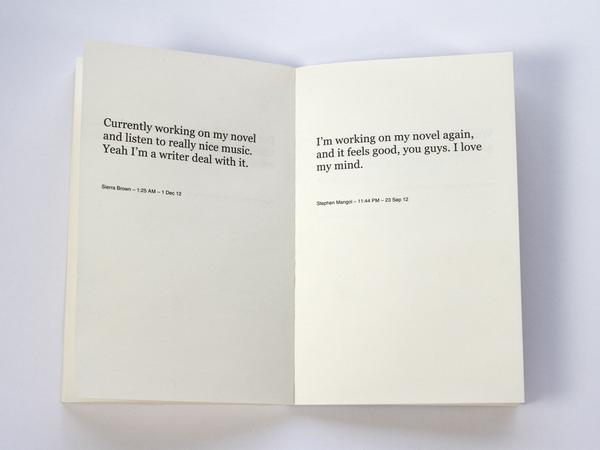


 Overthinking It